Writing Process Photo Essay

My writing process consists of lots of activities and items that can keep me focused for the maximum amount of time possible. I always attempt to finish the writing assignment in one sitting, as I believe I do my best work this way due to the fact that everything is fresh in my mind. In order to accomplish this task, I always attempt to put myself into the same circumstance and situation every time.

Before I start writing, I isolate myself as much as possible from any distractions, so I can focus solely on the writing assignment. I have to make sure I am alone in a room, so I won’t be distracted by anyone or be tempted to have a conversation with anyone. My workplace needs to be clean and organized, so I can feel comfortable working there for a long time. In order to further increase my focus, I play music at a low volume in order to soothe the feel of the environment and relax my nerves. After all of these preparation steps are complete, I can begin my writing. 

A neat and clean work area
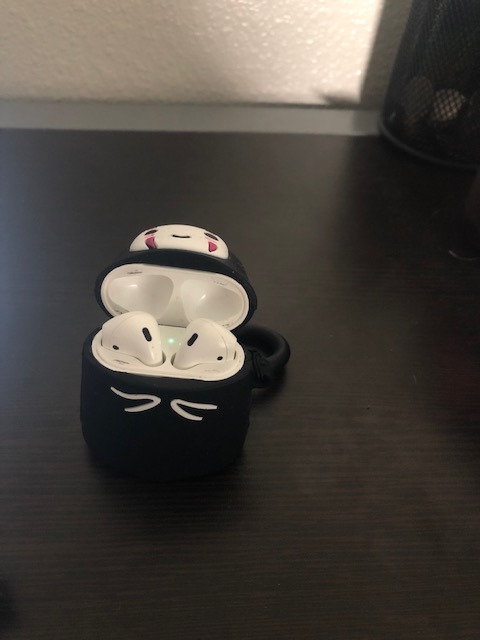
Air pods to listen to music

I start the writing portion of my process by researching the topic and taking notes on main concepts and quotations I can use in my essay. After thoroughly researching the topic, I then create a rough outline of my essay, incorporating the main ideas and quotes I obtained. After spending the time researching and creating the outline, I often take a quick mental break and eat a quick snack in order to prepare myself to write for an extensive amount of time. I then begin writing my essay, and don’t stop until I finish the assignment, or until I am so mentally drained that I can not write anymore. After I finish the writing assignment, I review my work, and check for simple mistakes. The only steps in between my writing process from when I start until I finish is a couple short breaks consisting of small snacks and quickly checking my phone. 

Outline and Note preparation
Snacks to eat during quick breaks
Water to drink during writing

My entire writing process revolves around the use of my laptop. I use google docs to take notes and create an outline of my assignment, and then continue to finish the assignment on my laptop. I keep my phone out of reach in order to minimize distractions, therefore making me get out of my seat in case I want to use my phone as a break. A habit that I often notice in my writing process is that I often listen to the same songs over and over, as they promote the most energy and focus.

Keeping phone in a drawer to make it out of reach
A song that I listen to over and over in order to promote focus

I attempt to use this method every time I write, however for longer essays, I have to break my actual writing portion of the process into multiple days, as my mental capacity can’t stay focused long enough to finish the essay in one sitting. It is difficult to represent my on the spot thinking portion of my writing process, as I often deviate from my outline because of a better idea. This process works extremely well for me for short to medium length assignments, as I am normally able to efficiently write and produce quality content in a reasonable amount of time. I research my topic and then almost immediately write my assignment, increasing my retention of information, and therefore strengthening my argument. 

One thing I would change about my process is allowing more time to revise. My revision often just consists of a proofread after completing my essay, as I am often mentally drained from nonstop writing. Eli review was extremely helpful this quarter, as other individuals are looking for ways to revise for me. However, I can not rely on this for the future, and I should incorporate a way to find time to revise my essay efficiently. 

Eli Review in order to revise

Should Parents Limit Their Children’s Smartphone Use?

Children develop during their young years, and start discovering and learning their personality and manners that will last throughout their lifetime. In the modern era, technology influences children greatly, as their world revolves around it. Smartphones are one of the most influential aspects of technology, and can leave a lasting impact on individuals and how they behave. As an individual’s childhood is extremely important due to the fact that people develop their brains, mental health, and social skills during this time, smartphone use during an individual’s childhood can greatly affect how they act. The effects of smartphone use on children’s development brings up the issue of whether or not parents should limit their children’s smartphone use. 

Children’s smartphone use has risen dramatically over the past few years, raising concern over whether or not parents should limit smartphone use. Smartphone use is a prevalent issue among children, as the demographics of the issue are discussed in the educational article, “How Do Smartphones Affect Child Psychology?”, by Amy Williams. The article describes that 70% of 11-12 year olds own a smartphone, 90% of 14 year olds own a smartphone, and 25% of 2-5 year olds own a smartphone. Extensive research has been done on this issue, as a growing proportion of children are beginning to own smartphones. Williams describes concern among this issue, as she states that “face-to-face interactions are the primary ways they gain knowledge and learn.” I agree with Williams statement, as I remember as a child I learned the most social skills and developed my mental thinking through face-to-face interactions, as smartphones can’t cover in person social skills. When children use smartphones and experience less face-to-face interactions, they can’t learn simple social skills, such as how to have a conversation efficiently by reading other people’s nonverbal communication, such as facial expressions and body posture. By trading face-to-face interactions for smartphone use, children are missing important parts of their development phase. The lack of in person communication can greatly weaken an individual’s communication skills for their life. Parents need to make sure that their child is experiencing enough face-to-face interactions in order to ensure that their child is properly developing social skills as well as stabilizing their mental health. Overuse of smartphones takes away from children’s time to explore and learn social skills through in person interactions, causing their development to be negatively affected.

Smartphone use can also cause problems among children’s sleep schedules. Children often use their smartphones during the night in order to cope with boredom. However, the overuse of smartphones during the night can disrupt an individual’s sleep schedule and contribute to sleep deprivation. In the article, “How Smartphones Are Affecting The Mind And Body Of Your Children,” by Elise Moreau, the correlation between sleep deprivation and smartphone overuse is explained by the blue light that is emitted from smartphones, causing the human body to think it’s still daytime. The human body becomes confused due to the blue light, and decreases the output of melatonin, causing a disruption in the sleep cycle. As a child, I didn’t own a smartphone until high school, and wasn’t able to use technology at night. I would always be asleep by 10 P.M., but when a smartphone was introduced into my life, my sleep schedule continuously got less consistent, and I started staying up later due to not being tired. These irregular sleep patterns directly correlate to smartphone overuse at night and sleep deprivation. Parents should be limiting their child’s smartphone use at night, as a habit of creating a good sleeping cycle is essential at a young age, as sleep is a big part of a child’s development stage. 

Individuals may have a different view on the issue of limiting children’s smartphone use. Some people believe that the benefits that stem from smartphone use are extremely beneficial and can improve a child’s early years. An example of this argument is stated in the article “Smartphones And Children: What Are The Pros And Cons”, where Helen O’Connor states that her children use smartphones frequently, and believes that the smartphones relaxe her children, causing them to have less tantrums and behave better. However, this overuse of smartphones is actually the root of the issue, as children need to be interacting with other people rather than spending their day distracted by their smartphones. Peadar Maxwell, a child psychologist explains this predicament, as smartphones can provide distractions that allow children to be too distracted to fight or misbehave, this causes a child’s brain to not develop properly. Smartphones do not contribute to the understanding of the nuances of communication, as smartphones can’t properly demonstrate emotion or body expressions. The negative impact of smartphone use on children’s development outweighs the positive impact that smartphone use brings.

Children develop and learn habits during their childhood that will stick with them for the rest of their life. The number of children owning a smartphone is constantly growing, and smartphone use greatly influences a child’s development. Smartphone overuse can cause children to not experience enough face-to-face interactions, inhibiting their development of social and communication skills, as well as correlate to worse sleep quality and sleep deprivation. The positive impact that comes with smartphone use is overpowered by the negative influence that smartphone use can have on children. Parents should be aware of the negative influence that smartphones have on their children, and should limit their children’s smartphone use.

Sources:

https://psychcentral.com/lib/how-do-smartphones-affect-childhood-psychology/

https://www.lifehack.org/373649/how-smartphones-are-affecting-the-mind-and-body-your-children-2

https://www.everymum.ie/kids/child-health/smartphones-and-children-what-are-the-pros-and-cons/

Should Parents Limit Their Children’s Smartphone Use?

Growing up as a child, I was extremely limited on my technology use, as my parents believed that I didn’t need technology to succeed and accomplish tasks, and thought technology use could be used as a reward and an incentive to do a good job. It wasn’t until my late teenage years, that I was given my own smartphone. I remember learning how to use my smartphone, and wondering why my parents wouldn’t let me use it before, as it seemed extremely convenient. However, I later appreciated my parents strict rules, as I realized that smartphone overuse can be extremely detrimental to an individual’s lifestyle and health.

Smartphones are a new technology that provide individuals with a mobile device that functions like a computer, as they can access the internet and are capable of downloading applications to address people’s specific interests. As smartphones are extremely valuable and useful, smartphone addiction has become a modern day issue. Smartphones are constantly developing, becoming more and more useful, causing people to become dependent on their functions. Smartphones have become extremely influential, and people are becoming more reliant on them, due to the fact that they’re capable of completing almost any task. Due to the constant development of new technology, more people are buying smartphones and becoming addicted to their smartphones everyday. In 2020, it was researched that 61.62% of the world population owns a smartphone. The growing addiction of smartphones was further explained by Deyan G., a writer for TechJury, as he explained that 66% of people that own smartphones show signs of nomophobia. Nomophobia, a fear of being without a mobile device, is a symptom of smartphone addiction, affects a humongous proportion of the human population. The symptoms of addiction are quite noticeable to other people, and Deyan G. also discusses how 63% of parents feel like their child is addicted to their devices. As parents witness their children’s lives being taken over by technology, they can sometimes feel helpless and worried. More than half of parents are concerned about addiction, a number that has risen significantly in the past few years. These proportions are constantly growing, as phones are becoming more entertaining, and are becoming capable of accomplishing new tasks. However, due to this, people are becoming so reliant on their phones that they forgot how to accomplish simple tasks without them, and can’t live without them. As this repetitive action of relying on phones takes place, it becomes harder to cut back on cell phone usage. Society is slowly becoming reliant on smartphones, and individuals are forgetting how to function without them.

Smartphones are a new technology, and therefore have a large impact on the new generation, as their lives revolve around technology. Smartphone addiction affects many young people, causing them to be dependent on technology. Smartphone addiction has raised concerns, as there are many negative side effects of being dependent on technology. As smartphones have already become fully integrated into society, the negative externalities need to be addressed in order to minimize the damage it causes to individuals. There are varying opinions on how to approach this issue, as some people believe that there should be no limits on smartphone use, and people on the other side of the spectrum believe the smartphone use should be minimal as possible. Opinions on this topic are very controversial, as the perspective on this issue varies from household to household. However, this issue needs to be confronted, as it will only continue to grow, until it affects almost everybody, and society will be completely reliant on technology. Smartphone addiction is slowly affecting society as a whole, and the issue can be addressed by limiting smartphone use among adolescents during their childhood.

Children develop habits in their early years, and start learning their personality that they will adapt for their entire lifetime early on. Teaching good habits and discipline is essential to ensure proper growth in children. Adolescents are developing in their early life stages, and need to act a certain way in order to be raised with a healthy lifestyle. The topic of children development is discussed in the article, ” 5 Reasons to Limit Your Child’s Exposure to Tech Gadgets”, where it is stated that toddlers cognitive ability is developing at this age, and can be damaged by smartphone use. Children’s motor, visual, and spatial skills are developing at a young age, and children need to be exposed to the right things in order to properly develop them. For example, natural exercise should be used as a distraction, in order to develop and grow their bodies, as well as make sure the brain functions healthily. Behavior is learned during the young age, which can be greatly influenced by technology. Smartphones can negatively impact a child’s growth and development, leading to detrimental effects on their health in the future.

Sources: https://www.thejoint.com/texas/houston/katy-28013/5-reasons-to-limit-your-childs-exposure-to-tech-ga

45 Scary Smartphone Addiction Statistics, 2020 [Nomophobia on the Rise]

How Smartphone Addiction Impacts Sleep

Smartphone addiction is a controversial new topic that comes with numerous negative effects. One of those negative effects is smartphone addiction’s impact on sleep. People may love their smartphones, but they often don’t realize that their smartphones are associated with a loss of quality of sleep, and less resting time. As this is a growing issue, researchers have put extensive research into discovering the true impact of smartphone addiction on sleep. As this research developed and was analyzed, experts have discovered that smartphone overuse negatively impacts people’s sleep quality and duration.

As teenagers are a large proportion of the individuals that experience smartphone addiction, studies are often performed on them. Sleep experts have stated that teenagers should be getting nine hours of sleep a night, but in 2015, 43% of teenagers reported sleeping less than seven hours a night. This causes a nation-wide issue on sleep deprivation among young adolescents. This sleep deprivation can be explained by smartphone usage. Jean Twenge, a professor of psychology at San Diego State University, wrote in the article “Teens are sleeping less- but there’s a surprisingly easy fix”, “The blue light emitted by smartphones and tablets simulates daylight, inhibiting the brain’s production of melatonin, the hormone that helps us fall asleep and stay asleep.” As individuals spend time online and on social media by using their smartphones, the blue light makes it so individuals don’t recognize the actual time of the day, causing individuals to not feel tired at night. I have recognized this myself, as I often pick up my phone to catch up on social media before falling asleep, and getting carried away online due to not feeling as tired anymore. Many other individuals confirmed having this problem, as they state their smartphones are often the last thing they look at before they go to sleep. As a lack of melatonin is produced, people don’t feel as tired, and find it harder to fall asleep and stay in a deep sleep. This continued cycle of smartphone addiction causes a sleep deprivation problem nation-wide.

Image result for smartphones and sleep

Smartphone addiction causes individuals to use their smartphones right before they fall asleep, affecting their sleeping cycle. Using smartphone devices before falling asleep causes people to have a lower quality of sleep. In a previously written article, “Your smartphone may be hurting your sleep”, by Susan Scutti, Scutti discussed this idea by referring to a previous study that explained “When we looked at smartphone use around the time when participants reported they went to bed, more smartphone use around that time in particular was associated with a longer time to fall asleep and worse sleep quality during the night”. Research made by experts all over have come to similar conclusions in which overuse of smartphones before sleeping is detrimental to one’s sleep, and causes sleep deprivation which creates further problems. Sleep quality is often lost, causing individuals to feel more tired. Smartphone addiction makes this predicament become repetitive, and the negative impact just keeps on stacking every night.

Sources: https://www.cnn.com/2016/11/09/health/smartphones-harm-sleep/index.html

https://www.pbs.org/newshour/science/analysis-teens-are-sleeping-less-why-smartphones

How to Break Smartphone Addiction

Smartphone addiction is a growing problem is society, and impacts individuals all over the world. As smartphones are developing and growing, our addiction not only consumes our leisure time, but takes over every free minute of the day. Experts have researched smartphone addiction and determined that it isn’t only the users fault, as it’s a growing issue due to the fact that smartphone designers are rewarded for creating techniques that keep you glued to your screen (Yazin Akkawi). However, this reliance on smartphones creates negative externalities that cause concern. Negative effects are being discovered that correlate to smartphone addiction, causing for the demand of a solution to address the problem. As smartphone addiction is a prevalent issue in modern day society, experts have given their input on their opinions on the most effective way to break smartphone addiction.

Individuals have come up with various ways of breaking smartphone addiction, most of them consisting of multi-step processes. A 7 step process developed by Victor Espigares, attempts to create an effective method to cut back extreme amounts of smartphone usage. The steps in the process consist of: not carrying your phone everywhere, turning off notifications, using airplane mode, not sleeping near your phone, disconnecting the WiFi at a certain time at night, scheduling time to attend to things online, and scheduling time to attend to things offline. Applying all the methods can greatly impact an individual’s smartphone use, as it correlates to the causes of addiction.

As people get addicted to smartphones from constantly using them, not having your phone on you at all times can help reduce dependency on smartphones, and encourage people to complete everyday tasks without them. Turning off the WiFi at a certain time at night also encourages individuals to not spend their leisure time connected to the internet. People often spend much of their leisure time at night on screens, causing a lack of sleep and a bad habit of using technology every night. Countless hours of rest are often lost due to smartphone use at night. Keeping your smartphone out of the room where you sleep at night also decreases an individual’s dependency on the smartphone. I often notice with my own personal use that when I sleep with my phone at night, the last thing I do before I sleep is check my phone, and the first thing I do when I wake up is check my phone. This produces a bad habit and a feeling of dependency on the smartphone.

The idea of FOMO (fear of missing out) is an extremely common cause of smartphone addiction, as individuals are afraid that they will miss out on something important if they don’t constantly check their phone. The methods turning off your notifications and turning on airplane mode address this predicament. Turning off notifications for bothersome and unnecessary apps, such as social media can greatly reduce smartphone usage. Turning on airplane mode also allows you to concentrate on offline tasks more efficiently. There should be no fear in missing on important information, because if it’s vital information, it will get to you some other way.

As smartphones can be extremely useful if used wisely, time can be set aside for online use. Individuals can schedule times during the day where they’re allowed to check their phone, and respond to notifications. Using this method increases productivity and reduces reliance, as you respond during a certain time of the day rather than every time they appear. With the freed time from all the other methods, individuals can fill in their leisure time with offline activities. Practicing and incorporating offline activities into people’s everyday lives promotes an individual’s well-being, and helps people spiral out of smartphone addiction. While smartphone addiction is a common issue, it is solvable and can be addressed.

Sources:

https://www.victorespigares.com/7-ways-to-break-your-smartphone-addiction/

https://www.inc.com/yazin-akkawi/7-ways-to-curb-your-smartphone-addiction-right-now.html

The Effects of Smartphone Addiction

Smartphones have become a revolutionary invention for individuals in the modern day. This technology has influenced the population greatly, and has become a necessity in many people’s everyday lives. People are becoming more and more reliant on smartphones, as they can be used for almost any task. Smartphones are being constantly used, and individuals become addicted from repetitive use, as they forget how to live without them. This addiction brings forth the issue of the effects of smartphone addiction. Society suffers from the issue of smartphone addiction, and we often don’t realize the negative effects that smartphone addiction puts on us.

How Smartphone Addiction Affects One’s Psychological State

When individuals are addicted to their smartphones, they are unable to cut back on cell phone usage, and use their cell phone as a solution to their boredom. When an individual that’s addicted can’t access their phone, an overwhelming sense of anxiety and depression comes over the individual’s body. The educational article, “Cell phone addiction and psychological and physiological health in adolescents” further expands on this issue, as it explains that excessive smartphone use produces a feeling of dependency and may increase the risk of anxiety and depression. Smartphone addiction takes a toll on an individual’s mental health, and intensifies the effect of anxiety and depression, as well as increases the probability. Research has also shown that with an increase in smartphone usage among individuals, symptoms of depression and suicide rate greatly correlate and increase as well.

Adolescents that are addicted to their smartphones also are susceptible to negative externalities associated with smartphone addiction. Mobile usage during the night is extremely common among adolescents and young adults. Using your smartphone during the night comes with various negative effects. Memory performance is shown to be hurt with lack of sleep, which is often lost due to cell phone addiction. As an individual that often uses their smartphone at night, I realize that I stay up an extra hour sometimes just to use my phone, which causes a lack of sleep and digital stress. Digital stress is shown as a common issue related to smartphone overuse, and the stress is shown to have an indirect correlation to depression and anxiety.

Individuals may turn to their smartphones when feelings of boredom, loneliness, or depression come forth, which creates a repetitive use causing addiction. The journal entry “Smartphone Addiction”, by Melinda Smith describes the phenomena of how individuals tend to lose themselves online, causing their feelings of loneliness to evaporate into thin air. However, this causes the issue to become even worse, as the online world provides opportunities to ruin mental health. Online, individuals compare themselves unfairly to their peers, promoting the negative feelings of loneliness and depression. As an individual constantly reverts to phone usage to remove a feeling of depression, this coping mechanism further promotes anxiety, as individuals become dependent on their smartphones. Without their smartphones, people become anxious, and perform poorly on daily tasks due to their reliance on smartphones as a coping mechanism. Smartphone addiction is detrimental to an individual’s health, and impacts numerous people within society.

Sources:

https://www.ncbi.nlm.nih.gov/pmc/articles/PMC6449671/

helpguide.org/articles/addictions/smartphone-addiction.htm

Smartphone Addiction

“We don’t just use our smartphones for everything – we rely on them”

-Brian Scudamore

How Addiction Develops

Smartphone addiction is a modern day phenomena that has a constantly growing impact. Individuals can become addicted to their smartphones without even realizing. As a higher percentage of the population is obtaining smartphones, the individuals that don’t own smartphones appear to be at a disadvantage, as they don’t have access to mobile technology that solves common issues. In other posts discussing this topic, such as the Forbes post, “The Truth About Smartphone Addiction And How To Beat It”, by Brian Scudamore”, people have explained how humans are naturally prone to distractions, and how smartphones provide many distractions. Posts have discussed how in the past, people have let themselves become bored and solve this problem by star gazing or walking around town. However, the smartphone allows for distractions to be in your hand constantly, causing people never be completely bored. Smartphones can be used not only for communication, but almost any task. Individuals claim that since smartphones are versatile and can be used for everything, they are addicting. However, while these claims are true, I believe the true addicting part comes from repetitive use. The addiction stems from smartphones providing access to everyday chores, and the individuals constantly using them to accomplish these tasks. When an individual uses their smartphones to complete these tasks, individuals become addicted, not because of their access to smartphones, but rather the fact that they repeatedly use their smartphones and forget how to accomplish the tasks without them. Accomplishing the tasks with your smartphone efficiently sends a “feel good” chemical to your brain. The more you perform these activities with smartphones, the more your brain craves it. The overuse of technology causes addiction, and individuals should be aware of the consequences.

Individuals can’t accomplish simple tasks without their smartphones, causing them to rely on them.

Breaking Addiction Through Boredom

People have been constantly talking about how smartphones are addicting, and what the effects of addiction are. A unresolved conversation is how to break the addiction. In previous posts, such as “I kicked my smartphone addiction by retraining my brain to enjoy being bored”, by Jordan Rosenfeld, individuals have discussed that breaking the addiction can be as simple as allowing your mind to enjoy being bored. The feeling of boredom is an essential instinct, as it allows us to get to know ourselves. Boredom is a cue that something needs to change. If we allow phones to remove boredom, we can miss important observations on life. A gruesome job may not feel as horrible due to smartphones being able to distract you, but you won’t realize that you should be changing your job due to the fact that there is no boredom.

You don’t have to completely give up technology in order to cure the addiction, but rather you just need to make sure you aren’t overusing it or using it to mindlessly distract yourself. Individuals need to understand that boredom is a instinct, and it helps us by sending signals that something in life has to change. It gives our brains a break, and allows us to appreciate ourselves without distractions.

Sources:

https://qz.com/1020976/the-scientific-link-between-boredom-and-creativity/?hootPostID=3daf32d0f7f4ef42c84f0388868ae8b7

https://www.forbes.com/sites/brianscudamore/2018/10/30/the-truth-about-smartphone-addiction-and-how-to-beat-it/#13ef7af14232

Introduce Yourself (Example Post)

This is an example post, originally published as part of Blogging University. Enroll in one of our ten programs, and start your blog right.

You’re going to publish a post today. Don’t worry about how your blog looks. Don’t worry if you haven’t given it a name yet, or you’re feeling overwhelmed. Just click the “New Post” button, and tell us why you’re here.

Why do this?

  • Because it gives new readers context. What are you about? Why should they read your blog?
  • Because it will help you focus you own ideas about your blog and what you’d like to do with it.

The post can be short or long, a personal intro to your life or a bloggy mission statement, a manifesto for the future or a simple outline of your the types of things you hope to publish.

To help you get started, here are a few questions:

  • Why are you blogging publicly, rather than keeping a personal journal?
  • What topics do you think you’ll write about?
  • Who would you love to connect with via your blog?
  • If you blog successfully throughout the next year, what would you hope to have accomplished?

You’re not locked into any of this; one of the wonderful things about blogs is how they constantly evolve as we learn, grow, and interact with one another — but it’s good to know where and why you started, and articulating your goals may just give you a few other post ideas.

Can’t think how to get started? Just write the first thing that pops into your head. Anne Lamott, author of a book on writing we love, says that you need to give yourself permission to write a “crappy first draft”. Anne makes a great point — just start writing, and worry about editing it later.

When you’re ready to publish, give your post three to five tags that describe your blog’s focus — writing, photography, fiction, parenting, food, cars, movies, sports, whatever. These tags will help others who care about your topics find you in the Reader. Make sure one of the tags is “zerotohero,” so other new bloggers can find you, too.

Design a site like this with WordPress.com
Get started